
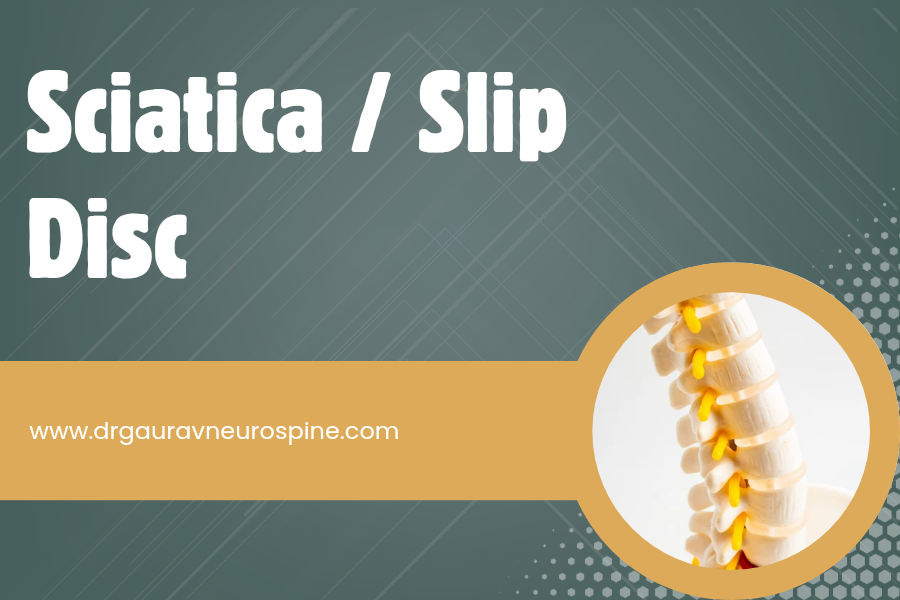
What is Sciatica / Slip Disc?
Sciatica is a condition where pain travels along the sciatic nerve, which runs from the lower back through the hips and down each leg. It usually happens when a nerve in the spine is compressed or irritated.
A slip disc, also called a herniated or bulging disc, occurs when the soft inner part of a spinal disc pushes out through its outer layer. This can press on nearby nerves and cause pain, numbness, or weakness.
Both conditions are closely related and are common reasons for spine pain and nerve-related discomfort.
Causes of Sciatica/Slip Disc:
Sciatica and slip disc can develop due to several reasons, including:
- Age-related wear and tear: Discs lose flexibility and strength over time.
- Poor posture: Sitting for long hours with improper back support.
- Heavy lifting: Lifting objects incorrectly can strain the spine.
- Sudden injury or trauma: Falls or accidents can damage spinal discs.
- Obesity: Extra body weight increases pressure on the spine.
- Lack of exercise: Weak back and core muscles reduce spine support.
- Repetitive movements: Jobs that involve bending, twisting, or prolonged sitting.
Symptoms of Sciatica/Slip Disc
Symptoms may vary from mild discomfort to severe pain. Common signs include:
- Pain in the lower back that spreads to the buttock or leg
- Sharp or burning pain along one side of the body
- Numbness or tingling in the leg or foot
- Muscle weakness in the leg
- Difficulty standing, walking, or sitting for long periods
- Pain that worsens with coughing or sneezing
In some cases, pain may be constant, while in others it may come and go.
Diagnosis
To identify the exact cause of spine pain, a doctor will begin with a detailed medical history and physical examination. Diagnosis may include:
- Physical examination: Checking posture, movement, reflexes, and muscle strength.
- X-ray: To look for bone problems or alignment issues.
- MRI scan: Helps detect disc herniation and nerve compression clearly.
- CT scan: Provides detailed images of the spine structure.
- Nerve tests (if needed): To assess nerve function.
Accurate diagnosis is important to decide the most effective treatment plan.
Treatment Options
Treatment depends on the severity of symptoms and the patient’s overall health. Most cases improve with non-surgical treatment.
1. Non-Surgical Treatment
These are usually the first line of care:
- Medications: Pain relievers and anti-inflammatory medicines to reduce pain and swelling.
- Physiotherapy: Exercises to strengthen back muscles and improve flexibility.
- Posture correction: Learning proper sitting and standing techniques.
- Hot and cold therapy: To relax muscles and reduce inflammation.
- Lifestyle changes: Weight management and regular physical activity.
Many patients feel significant relief within a few weeks with these methods.
2. Minimally Invasive Procedures
If pain does not improve, doctors may suggest:
- Epidural injections: To reduce nerve inflammation.
- Nerve block therapy: For temporary pain relief and healing support.
These procedures are usually done without major surgery and allow quick recovery.
3. Surgical Treatment (When Required)
Surgery is considered only when:
- Pain is severe and persistent
- There is nerve damage
- Daily activities become difficult
Common spine surgeries include:
- Microdiscectomy: Removal of the damaged part of the disc.
- Laminectomy: Removing pressure from the spinal nerve.
- Spine stabilization procedures: In advanced cases
Modern spine surgery is safe and often minimally invasive, allowing faster healing and shorter hospital stay.
When to See a Spine Specialist
You should consult a spine specialist or doctor if you experience:
- Pain lasting more than a few days
- Increasing weakness or numbness in the leg
- Difficulty walking or standing
- Loss of bladder or bowel control (medical emergency)
- Pain that does not improve with rest or medication
Early treatment helps prevent complications and long-term nerve damage.
Prevention Tips
Sciatica/Slip Disc cannot always be prevented, certain habits may support overall spine health:
- Maintain a healthy lifestyle with balanced nutrition
- Avoid tobacco use
- Seek early treatment for chronic back pain
- Attend regular health check-ups
- Follow safety measures to prevent spinal injuries
- Report unusual or long-lasting symptoms to a doctor
Early detection remains the best way to manage Sciatica/Slip Disc effectively.
Frequently Asked Questions (FAQs)
Is sciatica the same as a slip disc?
No. Sciatica is nerve pain, while a slip disc is one of the common causes of sciatica.
Can sciatica be treated without surgery?
Yes. Most patients can recover with medication, physiotherapy, and lifestyle changes.
How long does recovery take?
Recovery time depends on severity of the symptms. Mild cases may improve in a few weeks, while severe cases may take longer.
Is walking good for slip disc pain?
Light walking and guided exercises can help, but it is best to follow a spine specialist’s advice.
Can sciatica return after treatment?
It can return if posture and lifestyle habits are not corrected as advised by spine doctor. Prevention and regular exercise reduce the risk of return.
Conclusion & Call to Action
If you or a loved one is suffering from persistent back or leg pain, do not ignore the symptoms. Consult a best spine surgeon in Udaipur today for proper evaluation and personalized treatment. Early care can prevent complications and help you live a pain-free, active life.
 Book an appointment now to begin your journey toward a healthier spine.